
The enabling platform for
RBP- and
RNA-targeted Therapies
Target Engagement, measured in cells
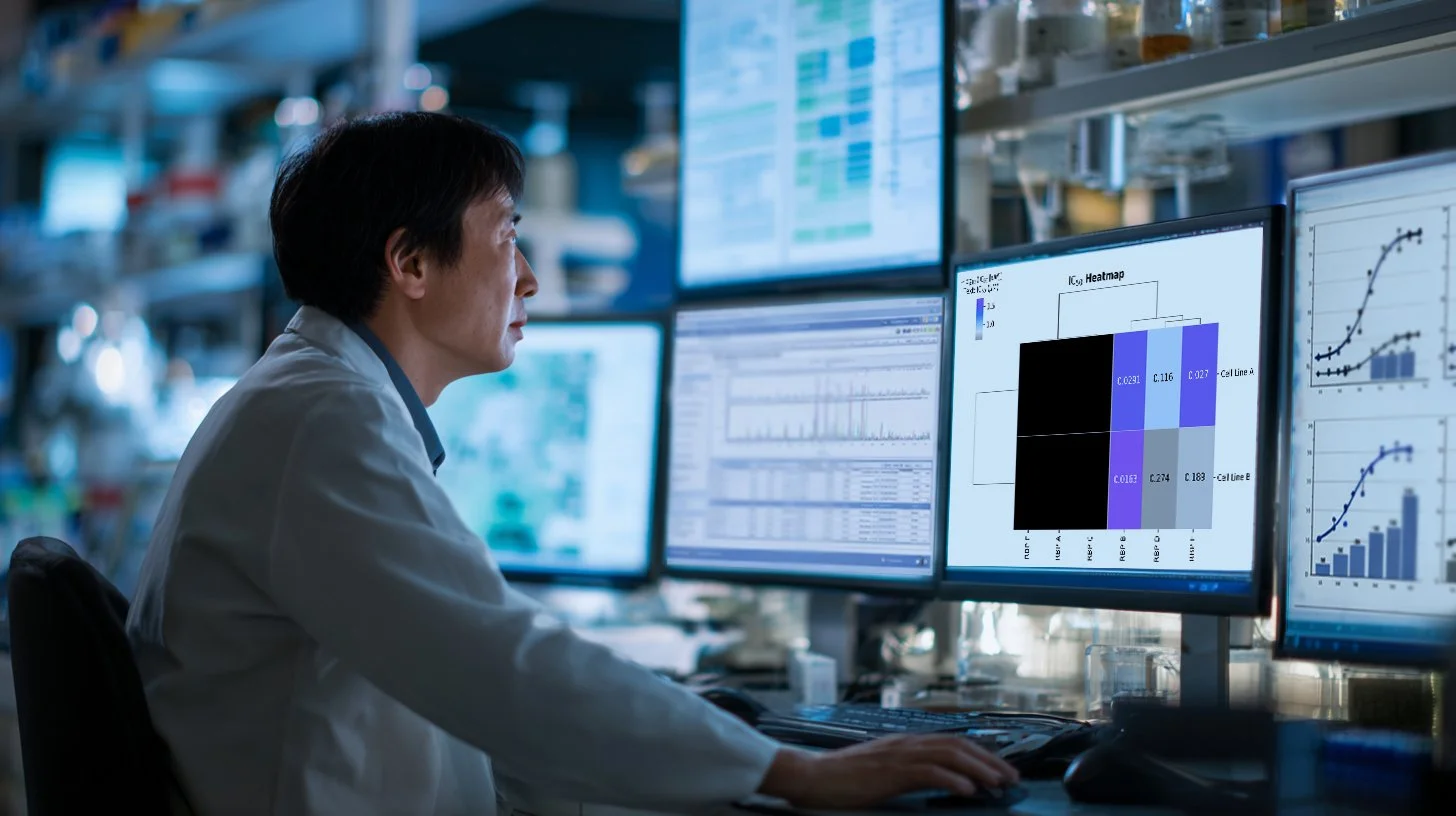
Quantify RNA-binding protein (RBP) cellular target engagement and selectivity in living cells, at the RNA–protein interaction level.
No tags. No proxies.
Direct, label-free engagement data to confirm on-target binding and flag off-target RBP perturbations early.

RBP Selectivity Profiling
(RBP-SP™)
Broad, unbiased selectivity profiling across the RBPome
Label-free, mass-spectrometry–based measurement of cellular target engagement across the RNA-binding proteome. Resolves mechanism-relevant engagement patterns and identifies early selectivity liabilities to inform progression decisions.
RBP Target Engagement
(RBP-TE™)
Focused, quantitative assessment of cellular target engagement
Label-free, cellular target engagement assays that quantify engagement IC₅₀ values and time-dependent engagement kinetics for nominated RNA-binding protein targets to support medicinal chemistry optimization.
The Ribolytix platform at a glance
Native Biology
Measures target engagement in intact cells under native conditions, supporting translational relevance and reducing artifacts associated with cell-free or overexpression systems.
Label and tag-free
Quantifies native, endogenous targets without engineered tags, fluorescent labels, or protein overexpression that can distort biology and generate false positives.
No Stability Assumptions
Directly quantifies target engagement via RNA–protein interaction state rather than inferring binding from stability shifts or altered protease susceptibility, providing mechanism-coupled readouts relevant to RBP target biology.
Ribolytix delivers biologically relevant engagement and selectivity readouts for RBP- and RNA-targeted therapies, directly measuring RNA–protein interactions in cells, enabling earlier and more confident prioritization of drug candidates during early discovery and lead optimization.
Advance better drugs, faster
“I first used this technique to solve a biology puzzle in the lab. When it worked, I realized it could transform drug discovery and development for many diseases.”